



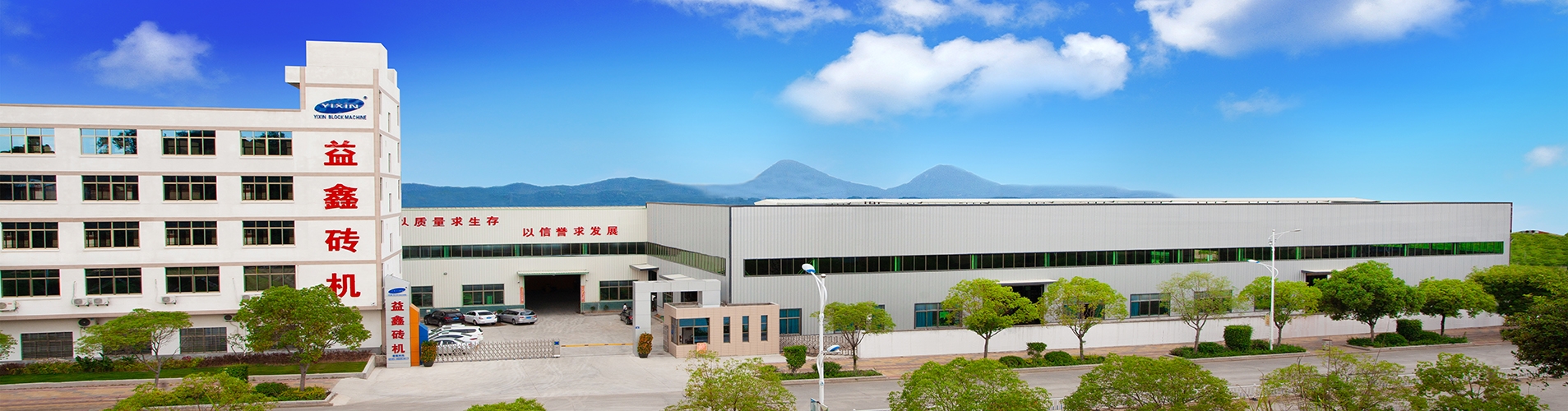
Slope-Protection Brick and Machinery Production: A Systematic Approach From Product Design to Equipment Configuration
As a vital construction material for water conservancy, transportation, and municipal engineering—balancing structural safety with ecological restoration—eco-friendly slope protection blocks are undergoing a transformation. Driven by "zero-waste city" initiatives and green construction policies, the industry is shifting from traditional precast components toward high-performance, customized products that utilize solid waste as a resource. This transition places higher demands on the upstream manufacturing equipment: machinery must not only meet standardized benchmarks for strength and durability but also offer the flexibility for customization to accommodate specific block shapes, raw materials, and production capacity requirements tailored to diverse engineering scenarios. This article examines the technical specifications for eco-friendly slope protection blocks and explores the key aspects and selection logic for the custom production of the equipment used to manufacture them.
I. Technical Specifications and Engineering Requirements for Eco-Friendly Slope Protection Blocks
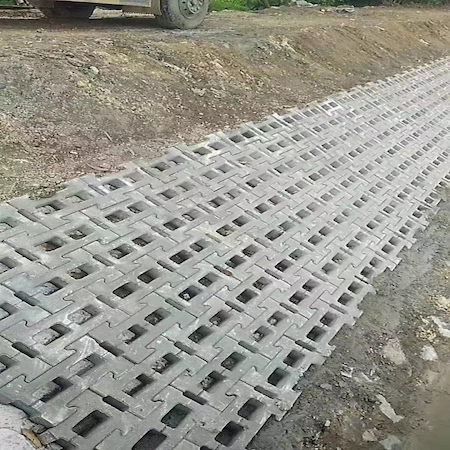
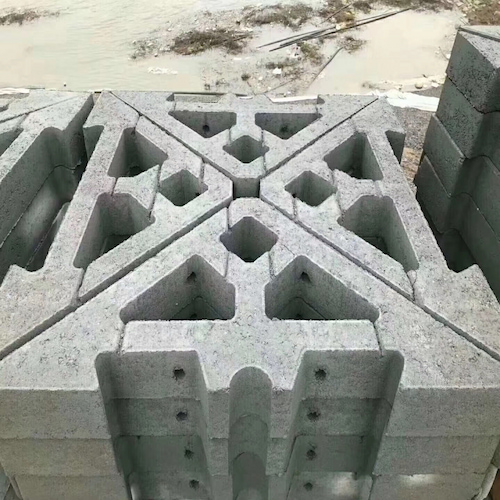
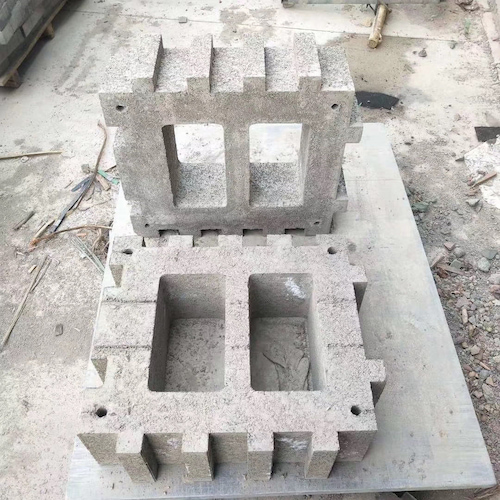
Eco-friendly slope protection blocks are not a monolithic product category; they encompass various forms—such as interlocking blocks, hexagonal grid blocks, permeable grass-paver blocks, and articulated (hinged) blocks—widely used in riverbank stabilization, embankment protection, roadside slope reinforcement, and coastal engineering. At the industry standard level, the building materials standard JC/T 2094—2021 provides a systematic framework for concrete blocks used in eco-friendly slope protection and dry-stacked retaining walls, covering terminology, classification, technical requirements, and testing methods applicable to water conservancy, transportation, municipal works, and landscaping. Furthermore, specific regional standards exist—such as those issued in Guangdong Province for machine-pressed eco-friendly slope protection blocks—which provide detailed requirements regarding raw materials, technical specifications, and inspection protocols.
In terms of performance, the core requirements for eco-friendly slope protection blocks center on three dimensions: compressive strength, permeability, and ecological compatibility. In practical engineering applications, for instance, blocks manufactured using steel slag or tailings (with an inclusion rate of up to 70%) can achieve a compressive strength of 40 MPa—significantly exceeding the standards for conventional slope protection blocks. Simultaneously, their unique structural design facilitates rapid rainwater infiltration, thereby reducing surface runoff, while the surface of the blocks is engineered to support plant growth, fostering vegetation restoration. Furthermore, the void ratio of porous structural bricks should ideally exceed 33% to meet requirements for vegetation growth and energy dissipation. These specifications directly dictate the configuration of brick-making machinery, including molding pressure, vibration parameters, and mold design.
II. Core Dimensions of Customized Brick-Making Machinery Production
The diversity of eco-friendly slope-protection bricks means that a single, standardized machine model cannot serve all purposes. Customized production must focus on three key dimensions: raw material compatibility, brick-type versatility, and production capacity alignment.
Raw material compatibility is the prerequisite for customization. Eco-friendly slope-protection bricks utilize a wide range of raw materials, including cement, stone powder, fly ash, furnace slag, mine tailings, steel slag, and construction waste. These materials vary significantly in terms of particle size distribution, moisture content, and cementitious properties, which directly influences the choice of molding process. For instance, while conventional vibrating brick machines often struggle to process fine-grained solid waste (such as steel slag powder or fine mine tailings), equipment utilizing high-pressure vibration-compaction technology can effectively increase the proportion of such fine materials, facilitating the resource utilization of large volumes of industrial solid waste. In providing customized solutions, manufacturers must adjust process parameters based on the specific characteristics of the client’s raw materials, implementing targeted modifications to the mixing, material-feeding, and pressing systems when necessary.
Brick-type versatility relies on the flexibility of the molds and the molding system. Eco-friendly slope-protection bricks come in a wide range of specifications—from common hexagonal grid bricks (with a side length of 300 mm and a height of 600 mm) to interlocking grass-paver bricks and "figure-eight" (octagonal-style) bricks—all featuring distinct dimensions and void patterns. Customized brick-making machines typically employ an interchangeable mold design; a single main unit can produce various products—such as slope-protection bricks, permeable pavers, grass-paver bricks, standard bricks, and hollow blocks—simply by swapping out the molds. Some advanced models even offer "integrated stone-effect" capabilities, allowing for the production of both PC (precast concrete) stone-mimic products and eco-friendly slope-protection bricks, thereby enhancing the equipment's adaptability to fluctuating market demands.
Production capacity alignment must account for both current requirements and future expansion potential. Small-scale production lines can yield between 10,000 and 60,000 units per day, while large, fully automated lines can exceed 200,000 units. Customized solutions must strike a balance between factory floor space, investment budget, and projected order volumes; a modular design facilitates future line expansion as well as transport and installation. For projects focused on the resource utilization of solid waste, it is also necessary to integrate supporting processes such as raw material pre-treatment, curing kiln systems, and automated palletizing.
III. Selection Logic: Determining Equipment Configuration Based on Product Standards
In practice, clients often fall into the trap of selecting equipment before defining the product. A more sound approach is to begin with the standards for the target product and work backward to determine the key equipment parameters. For instance, if the target market involves municipal riverbank stabilization projects—where products must meet the compressive strength and durability requirements of the JC/T 2094—2021 standard—the brick-making machine must provide sufficient molding pressure and vibration frequency to ensure the required density of the bricks. If the project is positioned as a demonstration line for the comprehensive utilization of solid waste, the equipment must prioritize compatibility with specific waste materials (such as steel slag or mine tailings) and accommodate high inclusion rates. If the product line needs to cover a variety of brick types to fulfill diverse orders, the ease of mold replacement and the flexibility of the molding system become the primary considerations.
Furthermore, the technical validation phase of a customized service is essential. A reliable equipment supplier will offer prototype trial production before full-scale manufacturing, verifying the feasibility of the process design by testing the strength, density, and other properties of the finished bricks. The integration of remote diagnostics and intelligent control systems provides ongoing support for fault early warning and process optimization during actual production.
--
Conclusion
The value of eco-friendly slope-protection bricks lies in the synthesis of structural safety and ecological functionality—a synthesis that is ultimately realized through the precise configuration of brick-making equipment. From interpreting standards and analyzing raw materials to designing brick types and planning production capacity, the essence of customized production lies in translating engineering requirements into the technical specifications of the equipment. For construction materials enterprises entering this sector, selecting an equipment partner with expertise in solid waste processing, mold development, and process optimization support is far more significant in the long run than merely comparing equipment price quotes. Driven by policies that promote green construction and resource recycling, the synergistic evolution of eco-friendly slope-protection bricks and customized brick-making machinery is forging a replicable technical pathway for both the valorization of solid waste and the ecological transformation of infrastructure.